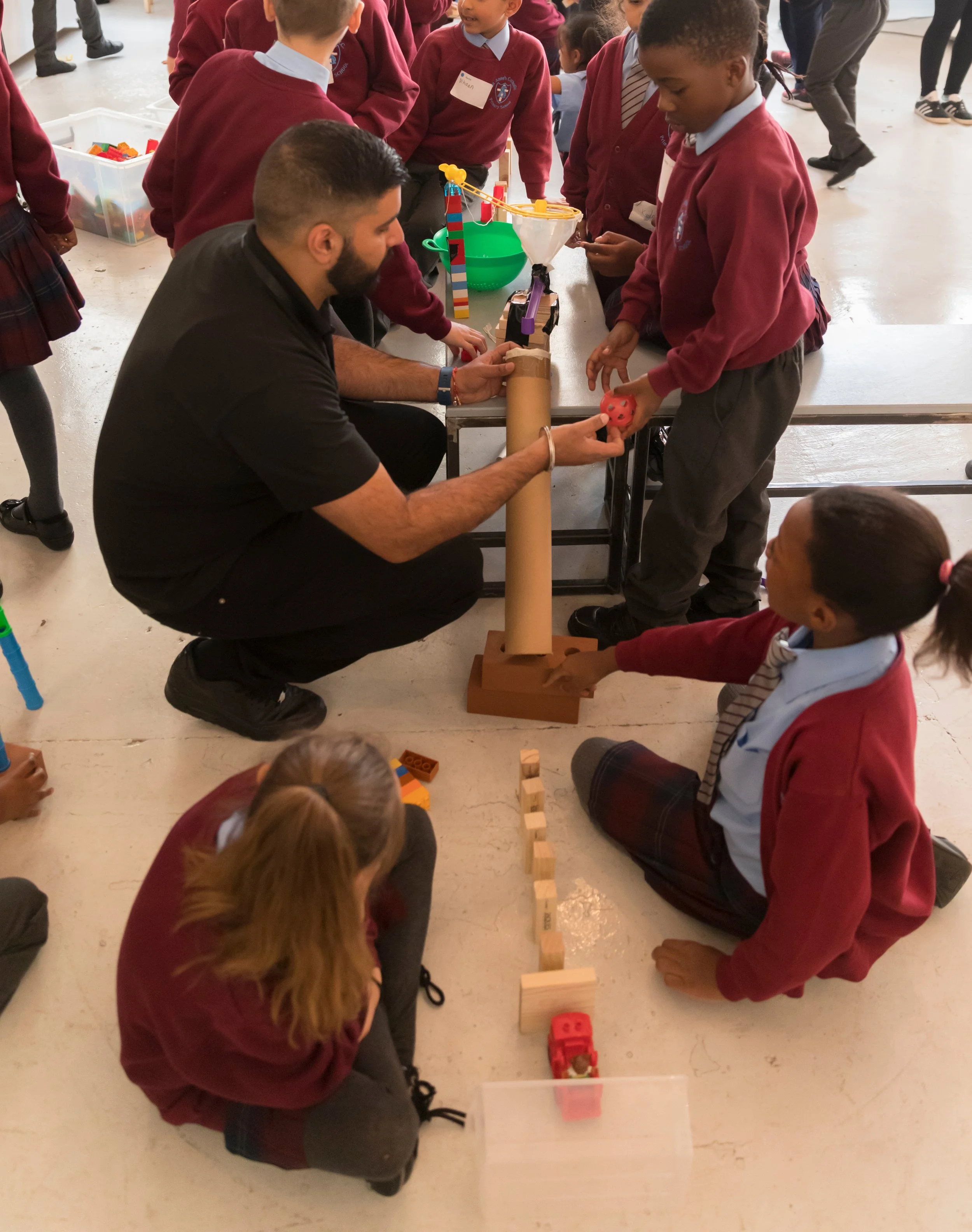
Chain Reactions
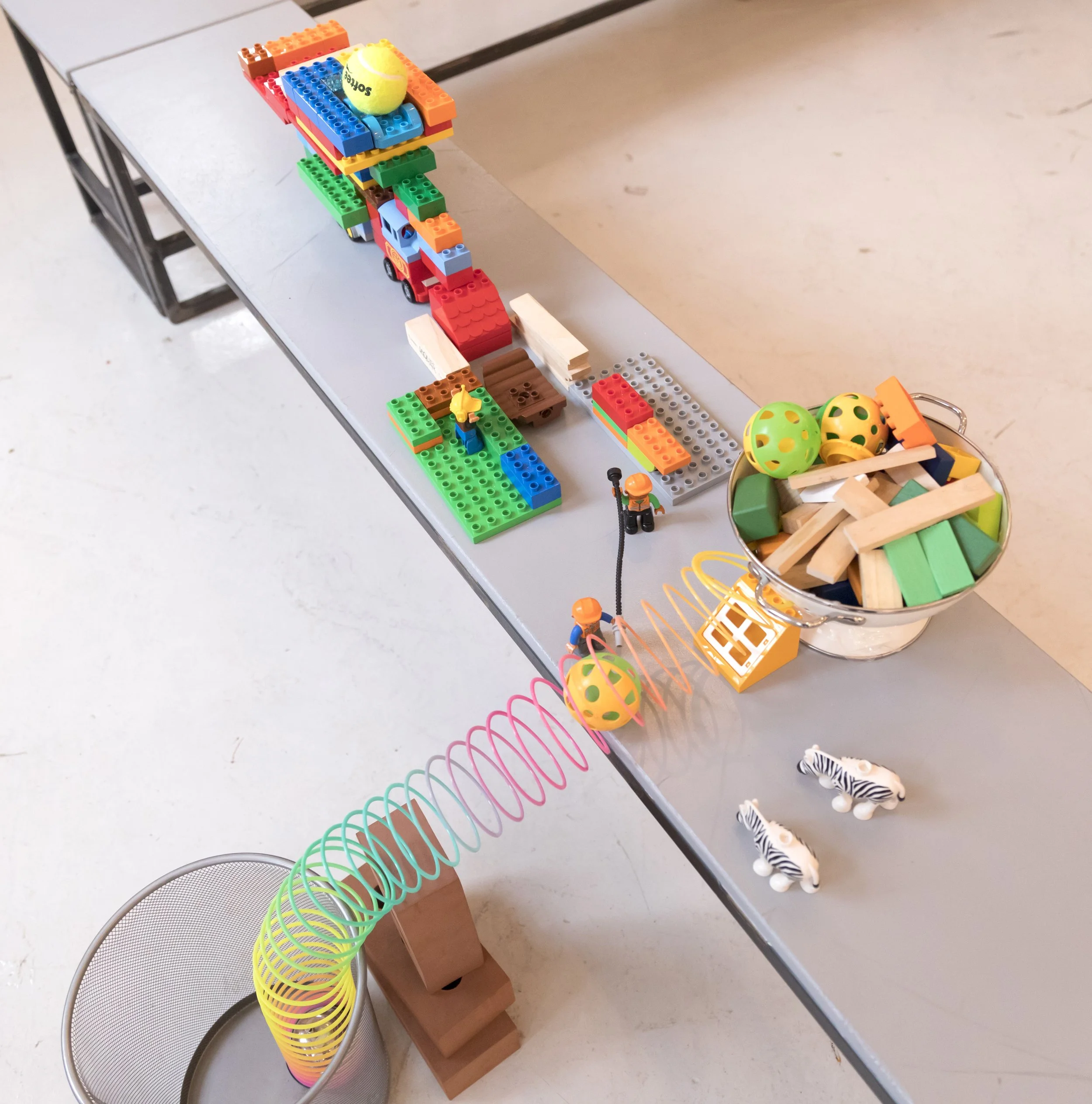
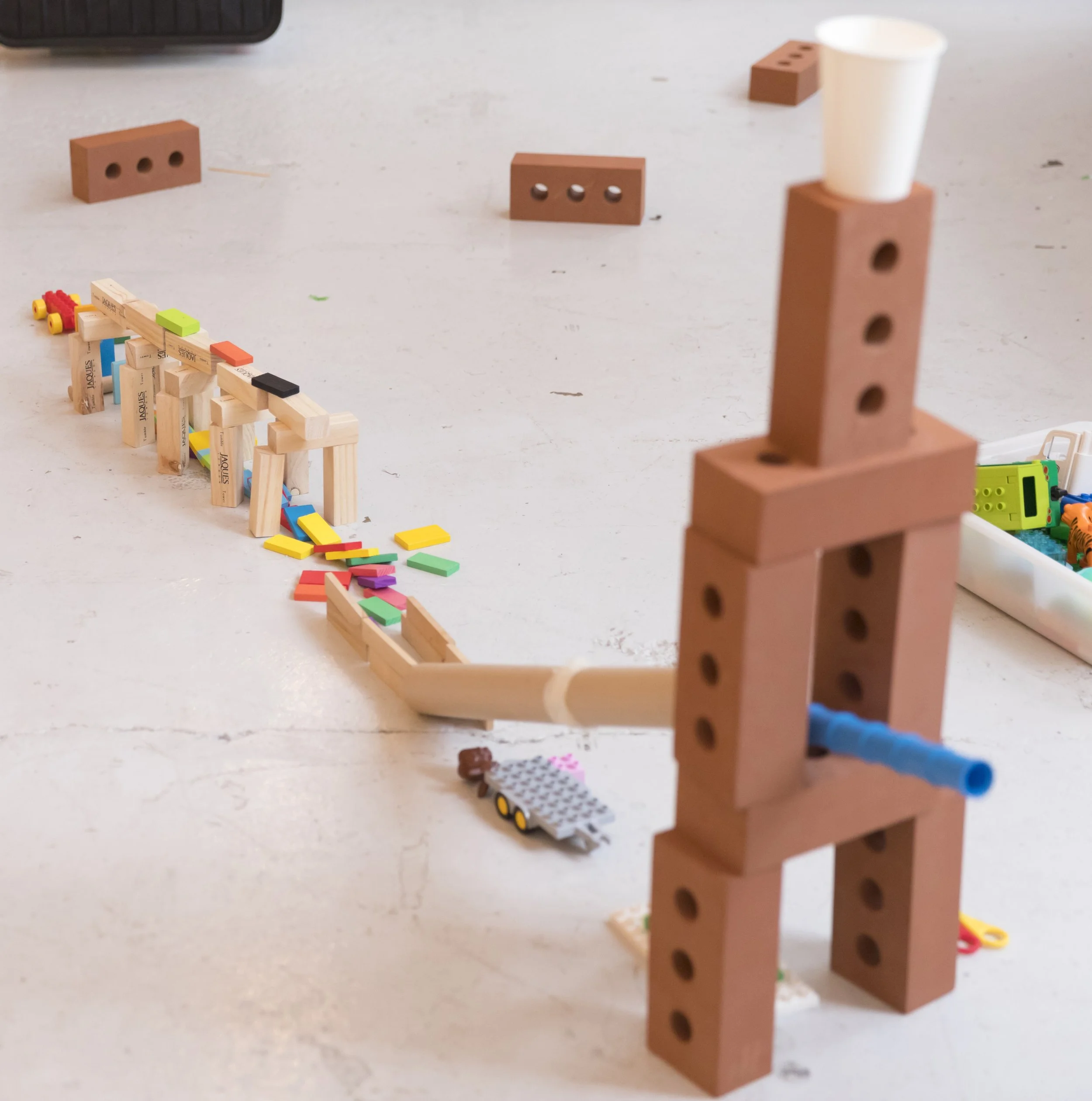
Set up a line of objects so that when the first one moves, it knocks into the next, and the next, and the next. The materials are things you already have at home.
You don't need to be a scientist or an engineer. You just need to be curious about what happens next.
Let's set off a chain
A chain reaction is when one object hits the next and passes its energy along. You see it in dominoes falling, a marble bumping a book, a ball rolling down a ramp.
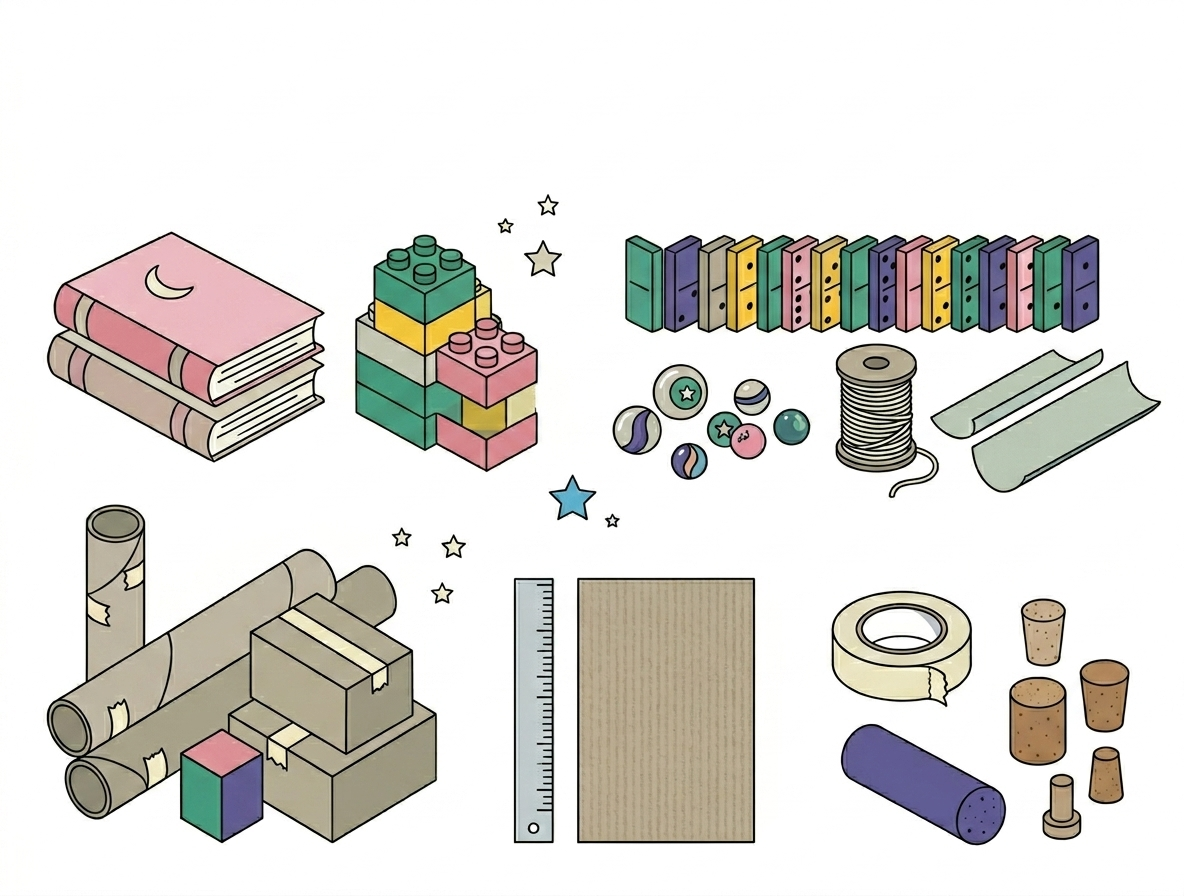
You will need
- Books
- Cardboard tubes or boxes
- LEGO bricks
- Marbles or balls
- Dominoes (if you have them)
- String
- Masking tape
- A ruler or flat piece of cardboard
- A cork or small cylinder (optional)
Swap anything you don't have for something similar.
Try these
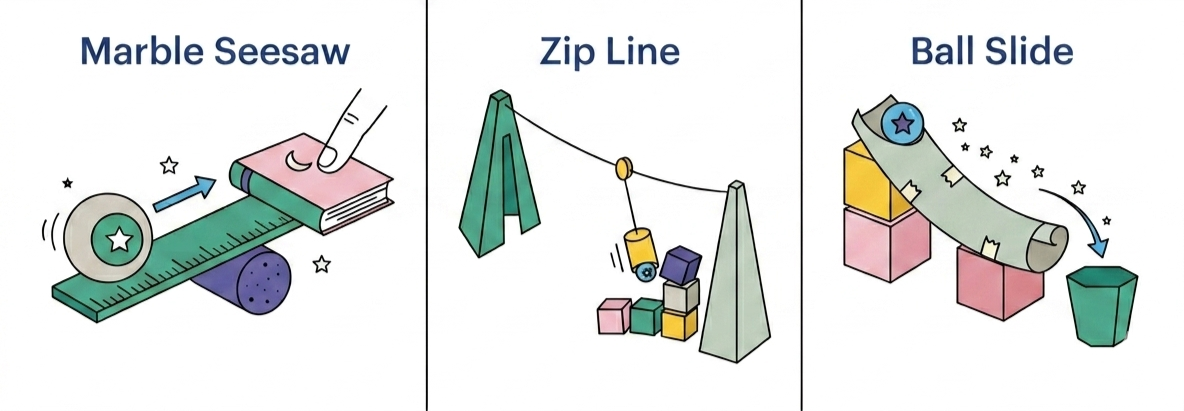
Three moves to get you started. Mix and match them to build something longer.
Marble seesaw. Balance a ruler on a cork or cylinder. Place a marble at one end. Push a book onto the other end to send the marble rolling forward. The heavier the book, the further the marble goes.
Zip line. Tie string tightly from a high point to a low point. Hang something with a bit of weight from it and let it slide down to hit the next part of your chain.
Ball slide. Roll cardboard or a paper tube into a ramp and fix it in place with tape. Let a ball or marble roll down from high to low into the next object.
Get started
Begin with just two objects. Stand one up so it falls when pushed, and place the second where the first will hit it. Test it. Once two objects work together reliably, add a third.
If you are not sure where to start, line up three heavy books in a row and push the first one over.
Have a go
- Collect. Raid the house for a mix of objects: things that stand upright, things that roll, things that slide.
- Set up. Place two objects so that the first knocks into the second when it falls or moves.
- Test. Try it. If it doesn't work, adjust the gap, the angle, or swap one of the objects. Your finger counts as part of the chain.
- Extend. Once two objects work together, add a third. Then a fourth. Keep going.
- Mix it up. Add a ramp, a zip line or a seesaw when you are ready to try something new.
Tinker
Once you have a chain running, try:
- Using heavier and lighter objects in the same chain to see which pass on the most energy.
- Filming it on a phone. Chain reactions are hard to catch in real time but great in slow motion.
- Building from one room into another.
Share what you make
We love seeing what families make at home. Tag us on Instagram and Facebook (@instituteofimagination) or email hello@ioi.london.
Chain reactions often take a few tries to get right. A chain that mostly works is still a chain reaction.
iOi Challenge: Use objects from around your home to build the longest chain reaction you can.